The buried pipe network that carried solar heat to the homes
A district heating loop is a shared hot-water pipe network, and Drake Landing's served all 52 houses with water at typically 40 to 50 C from the Energy Centre. The temperature was kept low on purpose, because gentle heat suits solar collectors.
Layout
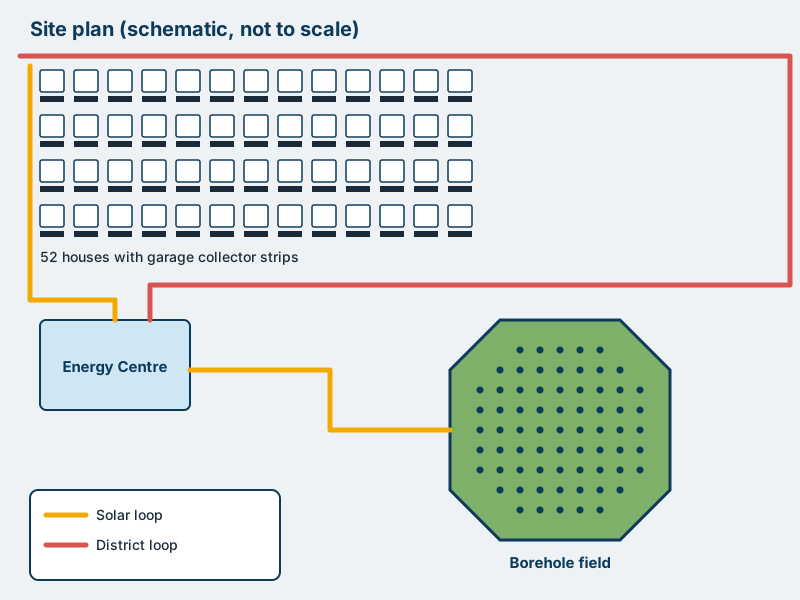
Pre-insulated plastic pipe was buried directly in the ground. Four separate home-run loops left a manifold in the Energy Centre, and the loop water connected to the short-term storage tanks through a heat exchanger. The working fluid was plain water. The Energy Centre sat in a corner of the park, and every house hung off one of the four loops.
Variable temperature and flow
Water temperature followed the weather: warmer when it was colder outdoors, cooler in milder spells. Flow rose and fell with the number of houses calling for heat. Both controls kept pumping energy and pipe losses down, which is easy to overlook in a system whose main job is moving heat.
Why low temperature
Conventional boiler loops run much hotter. Solar collectors, though, work more efficiently the cooler the fluid they are heating, so a low-temperature loop means more total heat reaches the houses. Lower temperatures also cut losses from the pipes. The trade-off is that each house needs a bigger heat-exchange surface, which is why every home has a low-temperature air handler instead of a furnace.
Where it fits
The loop is the last link in the chain described in how it works: collectors, tanks, ground store, then this network. The houses at the end of it are covered on the homes page.
What it meant for the street
Because the loop ran at low temperature and was buried and pre-insulated, there was nothing to see above ground other than the collectors on the garages. Residents dealt only with a thermostat. How the idea was first presented to the public is covered in a March 2005 article on solar heating in the homes.
Construction and afterlife
Trenching and pipe laying took place during the early build years; the 2005 timeline and 2006 timeline show the ground being opened up. When the solar system was wound down from 2024, houses moved to natural-gas furnaces and no longer rely on the loop. What happened to the buried pipe itself has not been verified here.
Quick answers
What temperature was the DLSC district heating water?
Typically 40 to 50 C, varying through the year with outdoor temperature.
What is district heating?
It is a central heat source feeding many buildings through a shared network of insulated pipes.
How many loops served the 52 homes?
Four individual home-run loops left a manifold in the Energy Centre.
Why use such cool water for heating?
Solar collectors run more efficiently with cooler fluid, and cooler pipes lose less heat, so more of the collected energy reaches the houses.